


School Observation on General Information and Academic Administration
I. School Profile
SMP Negeri 02 Semarang is a State Junior High School which encompasses Grades 7, 8, and 9. It is located on Jalan Brigjend Katamso No. 14, Kelurahan Karangtempel, Kecamatan Semarang Timur, Kota Semarang. The school is bordered by Jalan Dr. Cipto on the west, Jalan Halmahera Timur on the north, and Banjir Kanal Timur on the east. It is 2 kilometers from Simpang Lima, 5 kilometers from the center of Semarang city, and 2 kilometers from the provincial government center. The school is located in a very strategic location because it is in the heart of Semarang city, easily accessible by public transportation, and close to the city and provincial governments.
The climate around the school is hot, but there are a number of open areas in the vicinity. SMPN 2 Semarang is located in Semarang Bawah, but it is not affected by tidal flooding because of the Banjir Kanal Timur dike.
The school buildings have large windows, which provide good ventilation. The buildings are also located higher than the road and the yard, which helps to prevent flooding.
The school, SMP Negeri 2 Semarang, aims to provide a conducive and safe learning environment for its students. It focuses on developing students' spiritual, social, and moral values, as well as promoting a sense of nationalism. The school also emphasizes the importance of character development, instilling qualities such as honesty, hard work, and friendship. Additionally, it encourages students to be environmentally conscious and to appreciate both local and foreign cultures. The school strives to establish partnerships with other schools, both within and outside the country.
Every morning, there are religious, nationalist, and local wisdom routines, including reading the Asmaul Husna, parents' prayers, and prayers before learning. The nationalist routines include saluting the flag when the flag is raised in the schoolyard, saluting the flag in the classroom after prayer, and reciting the Pancasila. The local wisdom that is maintained is a smile, greeting, greeting, politeness, and courtesy that is done every morning when welcoming students.
This 2023, SMP Negeri 2 Semarang was awarded the title of "Siaga Kependudukan" (Population-Ready School). As a result, the school has been involved in activities from the Semarang City Population and Family Planning Agency and the National Population and Family Planning Board.


III. Teaching System
The teaching system at SMP Negeri 2 Semarang focuses on implementing thematic, integrated, scientific, inquiry-based, and project-based learning approaches. Teachers are equipped with the skills to utilize various applications and develop engaging and varied learning experiences. The school emphasizes the use of technology, such as computers and LCD displays, to enhance the learning process. The availability of resources, such as books and interactive boards, supports the implementation of effective teaching methods. The school also emphasizes the importance of balancing intracurricular, extracurricular, and project-based teaching loads, ensuring a well-rounded educational experience for students.
Teachers' professional development is carried out in the form of ongoing practical training, including the Guru Penggerak (Leading Teacher) program, the Guru Pendamping (Companion Teacher) program, partnerships, PMM (Pembelajaran Merdeka Mandiri) (Independent Free Learning) programs, the Tanoto Foundation, and the Surala Semeru program. This is a commitment to being professional in providing services to students.
In terms of pedagogical perspective, the school considers the Law on Teachers and Lecturers, which states that teachers have the opportunity to develop their professionalism on an ongoing basis through lifelong learning. From the pedagogical foundation in the context of independent learning, the learning process at SMP Negeri 2 Semarang is student-centered and takes various forms. Learning is a collaborative team activity.


II. Academic Support System
The school offers various academic support systems to cater to the diverse characteristics of its students. It provides opportunities for students with different potentials and achievements to participate in competitions based on their interests and abilities. The school also implements a flexible approach to strengthen students' understanding of Pancasila, allowing for customization in terms of content and timing. Furthermore, the school ensures systematic assessment of students' competencies, involving the collection, analysis, and interpretation of information to determine their learning progress.
The organization of learning in the school encompasses two primary components: the Intracurricular curriculum and the Project to Strengthen the Pancasila Learner Profile. The Intracurricular curriculum adheres to the guidelines set forth in Ministerial Decree No. 56 of 2022, specifying time allocations for compulsory subjects, local content, and special characteristics. It also outlines various assessment types, strategies, and implementation timelines, including summative assessments, criteria for achieving learning objectives, and mechanisms for grade promotion. The Project to Strengthen the Pancasila Learner Profile focuses on cultivating Pancasila values in learners. It involves implementing specific themes with defined objectives, timelines, and teacher responsibilities. A matrix guides the project implementation, and assessments employ various techniques aligned with the project's schedule.
To meet the needs and demands of the future for students, SMP Negeri 2 Semarang has developed an operational curriculum that is tailored to the characteristics of students and the local culture. The curriculum is legally based on relevant education regulations from both the central and local governments. Pedagogically, the curriculum is based on the ability of teachers as professional educators in teaching and assessment.
The school teaches 11 subjects to its students – Indonesian Language, Javanese Language, English Language, Religious Education, Civic Education, Natural Science, Mathematics, Social Sciences, Physical Education, Art and Culture, and Crafts/Informatics. Meanwhile, the school also offers 23 extra-curricular activities – Scout, BTA, Tambourine, Paskibra, PMR, Journalism, KIR, English Club, OSN Mathematics, OSN IPA, Water Rockets and Robotics, OSN IPS, Futsal, Volleyball, Basketball, Cheer Leaders, Karate, Martial arts, Music (band), Choir (Choir), Art painting, Dance Arts, and Gamelan (musical).
Based on one of the educational values of Ki Hajar Dewantara, the "3N" (Niteni, Nirokke, Nambahi) which means observing, watching or listening, and considering the demands of the 4.0 era, the school has added a fourth N, "Nggawe" (to create, make, produce, or discover something new). These four Ns are the hallmarks of learning that will be undertaken by students and teachers at SMP Negeri 2 Semarang.
The SMP/MTs curriculum structure consists of 1 (one) phase, namely Phase D. Phase D is for class VII and class VIII. The SMP/MTs curriculum structure is divided into 2 (two), namely: intracurricular learning; and projects to strengthen the profile of Pancasila students are allocated around 25% (twenty five percent) of total JP per year.
Implementation of the project to strengthen the profile of Pancasila students is carried out flexibly, both in terms of load and implementation time. By content, the profile project must be refers to the achievements of the Pancasila student profile according to the student's phase, and not must be linked to learning outcomes in the subject. Management wise implementation time, the project can be implemented by adding up the allocation of lesson hours projects from all subjects and the total amount of implementation time for each the projects don't have to be the same.
Learning at SMP Negeri 2 Semarang, which is integrated with the Pancasila Learner Profile, generally aims to develop students' characters who are: religious and have noble character; globally inclusive; independent; critically thinking; collaborative, and creative and innovative, capable of creating ideas/concepts based on local characteristics that are still rooted in national culture.
The community around SMP Negeri 2 Semarang is a diverse community with a strong sense of community spirit. The community is also supportive of the school and its activities. The school's alumni association is likewise very active and supportive. There are also many third parties who are interested in partnering with the school.
Pedagogical Contents
About the Mentor Teacher
Dra. Dyah Purwaningrum is a Grade VIII Science teacher and a staff member of the curriculum affairs department at SMP Negeri 2 Semarang. She holds a Bachelor of Physics degree from Universitas Negeri Semarang (UNNES). She is already in her thirty-seven years in the field of teaching.

I. Teaching Methods
The mentor teacher employs a diverse range of teaching methods, including thematic, integrated, scientific, inquiry-based, and project-based learning. These cater to various learning styles and aligns with contemporary pedagogical perspectives. Technology integration is evident, with teachers utilizing applications and tools like books, Power Point, videos, and Microsoft Teams to create engaging and varied learning experiences.
At SMP Negeri 2 Semarang, the learning process is firmly student-centered and collaborative. Students actively participate in group activities, presentations, and mini-research projects, fostering ownership of their learning and developing essential communication and critical thinking skills.
II. Teaching Materials and Innovation
One noteworthy practice is the use of Problem-Based Learning, which effectively cultivates critical thinking and problem-solving abilities. Additionally, the teacher utilizes technology through various tools like Quizizz, Google Forms, and online tests, demonstrating a commitment to enhancing student learning through technology. Also, she creates materials aside from presentations such as cross words and mind maps.
III. Learning Resources and Technologies
SMP Negeri 2 Semarang provides adequate resources for teachers to implement effective teaching methods. This includes books, desktop computers, internet, projectors, their screens, and white boards. She further enhances learning with technologies such as software or websites which serve as participatory spaces for learners that promote students and teacher’s real-time interaction and faster collation of students’ responses. Technology is integrated seamlessly into the learning process.
IV. Authentic Assessment
A range of assessment methods are used to comprehensively evaluate student learning and progress. These methods include direct questions, paper tests, online tests, multiple-choice questions, complex multiple-choice questions, group presentations, and self-reflection. Notably, some assessments require students to explain their answers and provide justifications, promoting critical thinking and deeper understanding. Additionally, students participate in the assessment process by providing feedback on their peers' presentations and reflecting on their own learning, fostering ownership and metacognitive skills.
01
Curriculum
Teaching Plan
I was tasked with creating a lesson and discussing 'Simple Machines' with Grade VIII students. Since it was impossible for me to understand and access their Science curriculum, I aligned it with the content standard recommended for their grade level in the Philippines' K-12 curriculum.
02
Teaching Plan Related to my Major
The semi-detailed lesson plan and PowerPoint presentation I used during my teaching practice can be viewed above and next to this document, respectively.


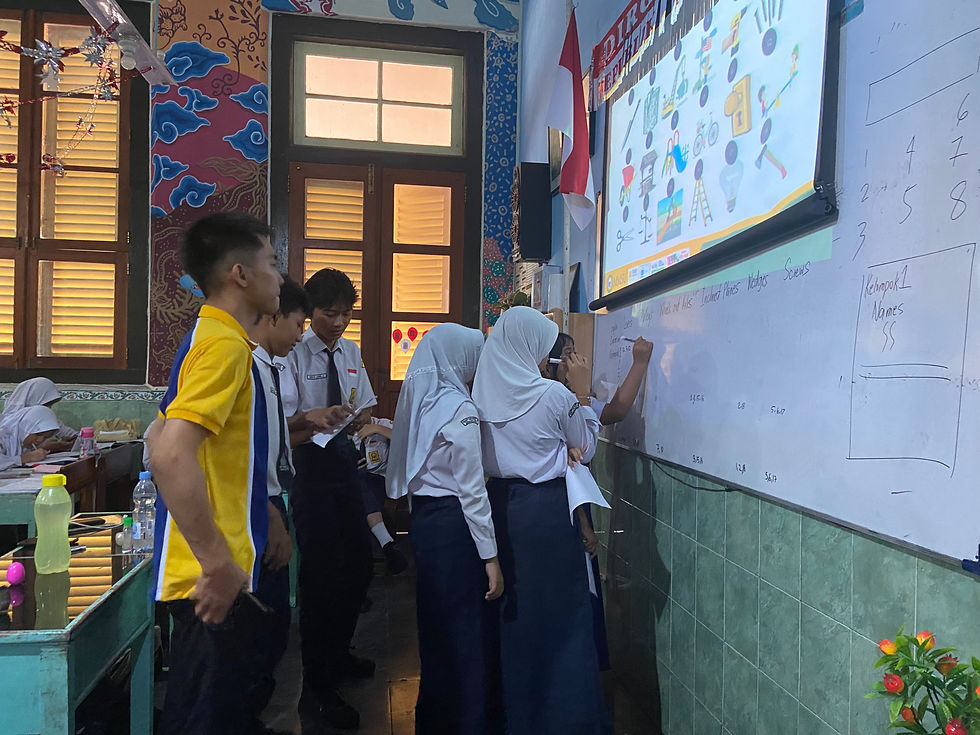


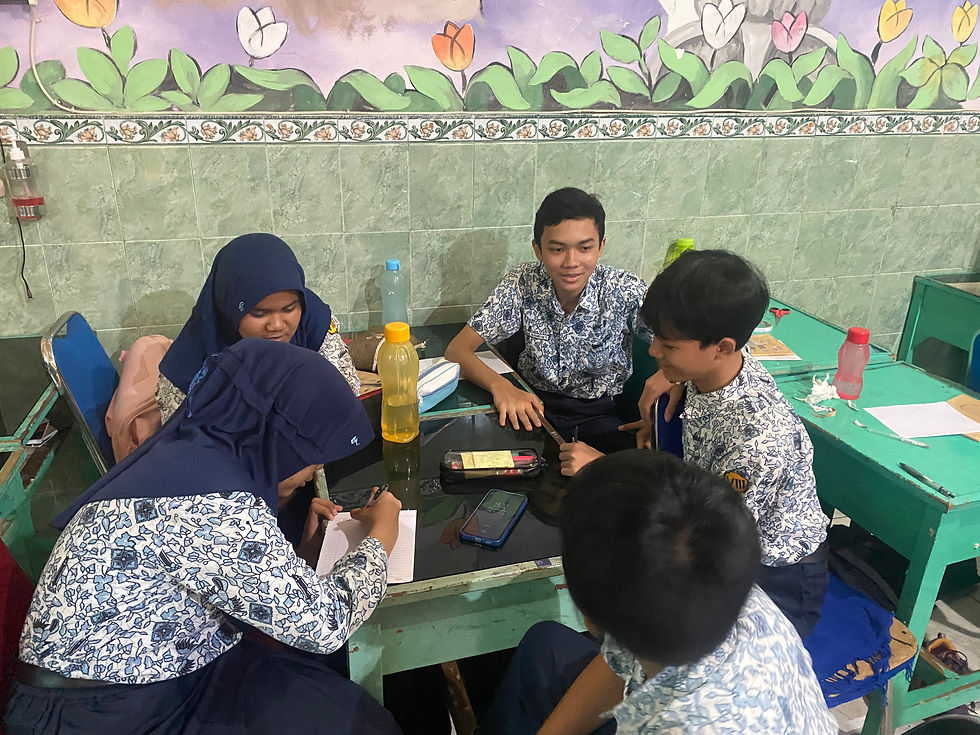

Teaching Practice
01
Procedures of Teaching
My teaching practice began with introducing myself and establishing a preliminary classroom environment. This included arranging the chairs, collecting trash, and setting clear expectations. I requested students to be respectful during discussions, raise their hands to speak, ask permission before leaving the classroom, and adhere to other essential rules. Following this, I proceeded with the lesson, integrating the "7Es" of lesson planning: elicit, engage, explore, explain, elaborate, extend, and evaluate.
02
Time Management and Organizing Activities
I prioritized keeping students engaged and offering them equal opportunities to participate. Recognizing the potential challenges with the medium of instruction, I ensured ample time for activities and allowed students to use their phones for translation and accessing relevant videos.
03
Classroom Management
While students were attentive during discussions, group activities presented some challenges. The physical arrangement of the classroom became disordered, and noise levels increased. To address this, I used verbal cues and raised my voice slightly to regain their attention and prompt them to re-order themselves.
04
Problem-solving During Teaching and Adapting to the School Environment
Several challenges emerged during my teaching practice. As mentioned earlier, the language barrier was a major obstacle for both me and the students. Their primary language of instruction differed from the Philippines, where English is used in science classes. This led to limited interaction and difficulty eliciting responses. However, with each teaching session, I became more flexible and adapted my approach. I encouraged students to utilize their phones for translation during group activities and implemented a strategy where they responded to a specific cue (e.g., clapping hands three times) to maintain engagement.
Another significant challenge was adapting to the school's equipment, which differed slightly from what I was accustomed to in the Philippines. This included differences in socket types and audio jacks. To overcome this, I consistently brought an adapter and created QR codes for online learning materials, ensuring smooth access for students.

TEACHING PRACTICE | Neil Bryant I. Lucas (MMSU-CTE, Philippines)
This video showcases my teaching practice at SMP Negeri 2 Semarang, Indonesia, on November 23, 2023. It was filmed during my participation in the SEA-Teacher Project 2023 Batch 9 as a pre-service exchange student teacher.